
|
|
|
 |
 |
 |
 |
 |
 |
 |
 |
 |
 |
 |
|||
| To access Member and Animal Search via the Livestock Registering Foundation, use this quick link below: |
 |
| https://www.lrf.co.za/zimbabwe/ | |
| To access the Goat Breeders Association of Zimbabwe (GBAZ) web page, click logo at right:: |
 |
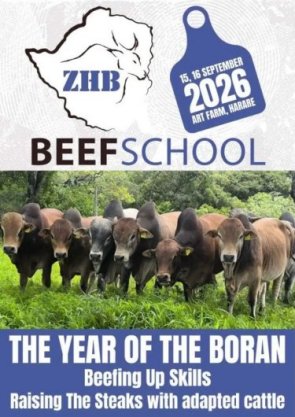
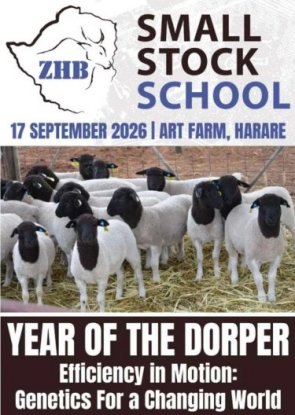
2026 Upcoming Events! Beef School 15 - 16 Sept and Small Stock School 17 Sept: |
In Memoriam: Cois Joubert Cois Joubert lived a life rooted in family, farming, faith, and service to his community. From his early years in Chipinge to his many years at Luipaardsvlei, he will be remembered for his hard work, generosity, and deep commitment to the people and places he loved. Cois grew up in Chipinge and later farmed at Luipaardsvlei, where he produced maize for his dairy herd, grew macadamia nuts and coffee, maintained a gum-tree plantation, and developed his well-known ZF Luipaardsvlei Brahman herd. Cois was a community-minded man and an Elder of the Dutch Reformed Church. He helped establish the dairy factory and actively promoted Steri Milk. He helped establish Muvurachena Primary School and assisted his neighbours by helping to drill boreholes. Above all, Cois was a devoted family man. He will be deeply missed by his family, friends, colleagues, and all who had the privilege of knowing him. |
 |
 |
| Late Birth Notifications
Breeders, please note: All birth notifications must be submitted within 60 days of birth. The amnesty period closed 17 Dec 2025. From 5 January 2026, late birth notifications attract these penalty fees: 61 to 180 days: $2 Contact us on trace@lit.co.zw if you have questions or concerns. |
Requests for Information RFIs - held birth notifications We must receive your corrections to enable the processing of birth notifications in this list. RFIs older than 6 months will be deleted. Inspection Lists For more details, download: |
Levy Increases 2026
Following the ZHB Council meeting in Nov 2025, these changes became effective in January 2026: Levies increased by 20%: Per Capita Levy: With effect from 1 January 2026, there is a fee of $20 to register imported animals. This caters for processing extended pedigree information, necessitating the capturing of 14 ancestors for each imported animal. When you receive your Herd Lists from us, check them and notify the Office of corrections. |
Take advantage of this LRF Tipsheet: Topic - Docility. Download Docility Tipsheet ** Watch the 1 minute video on Docility LRF Tipsheet on Birth Weight About the LRF Tipsheet series: Each month, we spotlight a key trait you should be recording - and why it matters; why you should record it, how to do it, how to submit recordings, how to interpret the EBVs. In Memoriam: Carmen Stubbs |
LRF Newsletters downloads: For more links to earlier issues of LRF News and LRF Technical News: RTU Scanning Services: Read more |
 |
|
| Pedigree livestock - also known as stud animals - are the seed stock of the livestock industry and is the basis of stud breeding. The Zimbabwe Herd Book was established by an Act of Parliament in 1980 to oversee the registration of pedigree livestock. Stud breeding involves the controlled mating of livestock and detailed birth notifications of progeny with parents are recorded with the Herd Book. In addition, stud breeders record the fertility, survival and growth performance.
Livestock production depends on three pillars: genetics, health and husbandry. Stud Breeding - genetics - is the cornerstone of commercial livestock production. A strong commercial industry is dependent on a healthy and vibrant stud industry to offer stud/breeding stock that meet requirements in a range of production environments and market scenarios. At its annual National Sales, all animals on offer have undergone veterinary examination and inspection so that the livestock industry is offered a wide range of top quality genetics. Stud breeding is a long-term passion where breeders strive to breed the ‘best’ animal. Breeders apply modern breeding technologies to carefully select animals to be parents of the next generation and in so doing, improve the genetic merit of future generations. Breeders also select parent material from outside the country in the form of live imports, semen and embryos. Stud breeding also requires the meticulous recording of parentage (pedigree) as well as specific performance data that measures reproduction, survival and growth. These performance figures, together with the parentage information, are used to select the best animals to be parents of the next generation. Genetic improvement is therefore passed on from generation to generation and from the stud herd to the commercial herd. ZHB has implemented BreedPlan, the leading performance evaluation software from Australia. The industry can now avail itself of the latest technologies that provide both breeders and commercial producers with accurate genetic assessment of animals that are selected for breeding purposes. A wide range of genetic material is also available for commercial producers who want to select the best breeds and breed combinations to meet their particular production environments. It is more economical to select the right breed for a particular production environment than adapt the environment to meet the requirements of the breed. |
|
| Links to useful documents and templates for ZHB Members: Summary of ZHB Breeders Requirements ZHB Birth Notifications Excel template ZHB Breeder Requirements Course Notes 2022 PowerPoint file BREEDPLAN BreedCodes ZHB Template |
Useful website links for ZHB Members:
Agricultural Business Research Institute (ABRI) https://abriweb.une.edu.au/databases/ https://abriweb.une.edu.au/breedplan/ Livestock Registering Federation |
| Breed Associations and Societies:
Constitutions To ensure alignment of breed societies constitutions, follow links to relevant documents below. The ZHB Office will gladly assist with the provision of a boardroom and facilitate setting up of online meetings via Google Meets. Contact the office for further information: Tel: 024 - 2756 600 / 2777 391 / 2772 915 / 0774 122 660 - or email: zhb-sec@lit.co.zw Registration of Pedigree Farm Livestock Act
|
Tips for Upgrading to HerdMaster5
1. If you already use HerdMaster, create backups of each of your databases. • First try and run the Bundled Installer Package (Online) https://tinyurl.com/herdmaster5setup 3. Run the downloaded file 7. On the registration screen: 8. If you have an active HERDMaster licence then put your CRN into the existing HerdMaster5 user field, otherwise put your details in and register for free trial 9. On the screen asking if you are a new user, if you have already been using a. Restore database 10. Otherwise, select 'I am new to HerdMaster' and create a new database |
| Setting Up Calving Year in BreedPlan
In the instance where a breeder has not defined a ‘Calving Year’ in BreedPlan, animals are treated as distinct groups within a Calendar Year, for example: 2022 born calves, and ident of all calves starts with year of birth, i.e. ‘22’. This typically applies to year-round calving. For breeders with a calving season that extends over the calendar year, for example, calving from September to March, provision can be made in BreedPlan to identify these animals as being in the same calving contemporary group. This avoids splitting the contemporary group in genetic analyses according to calendar year. To cater for this, we firstly require you to confirm your Calving Year. For example, with a calving season extending from September to March, then a Calving Year can be defined as April to March. Then all calves born from 1st April 2022 to 31st March 2023 will be given the same Year of Birth in their Ident, that is 21-NNNNHDL. To advise ZHB of your Calving Year so we can make necessary edits to BreedPlan to cater for your calving seasons, email trace@lit.co.zw |